Back in the early days of opening KORU in Denver (originally CrossFit Broadway), I thought working harder was the answer to everything.
I'd work 14-hour days trying to build the business, train twice a day, party a little on the weekends, and completely ignore everything that was going on inside my own head.
My routine was pretty simple. Work. Train. Work. Train. Go home exhausted. Kick the ball around with the kids for a bit. Eat dinner. Fall asleep. Then do it all again the next day. Six days a week.
At the time, I wore it like a badge of honor. I thought that's what I was supposed to do, and what success looked like.
But eventually my body had other ideas. I started getting injured... a lot. My shoulder would flare up. My back would go out. Something always seemed sore or tight, and it was hard to get out of bed in the morning. And no matter what I did, nothing seemed to heal properly.
Looking back now, it makes perfect sense. I wasn't just overtraining physically. I was overloaded emotionally. I was trying to build a business while avoiding a whole heap of things going on internally: stress, grief, fear, uncertainty. I just buried it all and kept pushing.
My nervous system was absolutely fried. I was living in a constant fight, flight or freeze state without even realizing it. My body wasn't broken. It was protecting me.
It wasn't until I hired a coach of my own that I realized just how deep the hole had become. That was really the start of my journey learning about the nervous system and how stress actually works. Learning breathing techniques, stress mitigation strategies, and tools that allowed me to regain control of my mental and emotional state instead of letting them control me.
We often think if we're not making progress in the gym, we simply need to train harder. Often, the answer is the opposite.
Your body doesn't know the difference between a tough workout, a work deadline, an argument with your partner, worrying about your kids, sitting in traffic on I-25, or financial stress. To your nervous system, stress is stress.
Every stressor adds load to the system. When that load becomes greater than your body's capacity to handle it, recovery starts to suffer. Strength stalls. Little injuries hang around. Sleep gets worse. Energy drops. Even your motivation disappears.
Your body doesn't recover when it's constantly in survival mode. It recovers when it feels safe. That's when you heal. That's when you get stronger. That's when your hard work in the gym finally starts showing up.
Train hard, absolutely. But don't forget to recover just as hard.
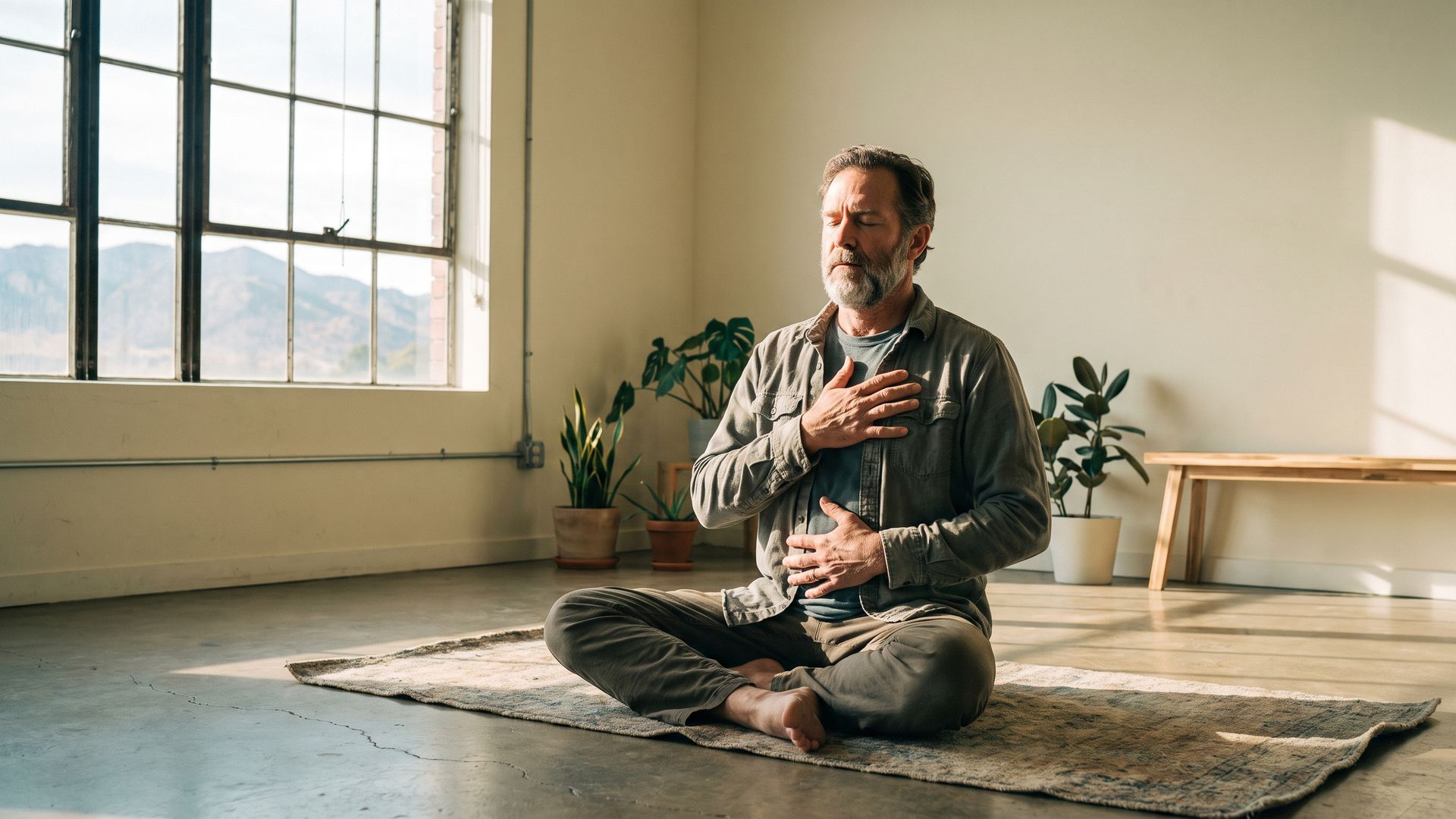
One of the easiest places to start? Your breathing. A few times each day, ask yourself: "Am I breathing through my nose or my mouth?" If you're sitting at your desk, driving, or walking the dog around the neighborhood, spend just two minutes slowing your breathing down through your nose. Nothing complicated. Just slow. Quiet. Controlled. It's amazing how quickly your body starts to change gears.
At KORU, we often talk about load vs capacity. Training is only one part of the equation. Your work. Your sleep. Your relationships. Your nutrition. Your stress. Your mindset. They all contribute to the total load your body is carrying.
Our goal isn't simply to make you stronger in the gym. It's to build your capacity so you can handle everything life throws at you, with more energy, less pain, and a whole lot more freedom.
So here's a challenge for you this week. Don't just focus on lifting heavier. Focus on becoming harder to stress. Because the calmer your nervous system becomes, the more your body can do what it's designed to do. Heal. Adapt. Grow.
"We don't rise to the level of our goals. We fall to the level of our systems. Your nervous system is one of the most important systems you'll ever train."